Tuesday, November 26, 2019

Week 17--Due 12/6

Hello Everyone,

Happy Thanksgiving to each of you and your families!  I hope you have a restful and fun week off.

Your work for the week is to prepare a short "fun fact" presentation for your Antarctica topic.  (1-2 minutes).

Your other work is to prepare for our end of semester celebration and zap game day as we discussed in class.

Below is a reminder of ways we decided individuals will contribute.

These folks will create questions for the Zap game. If you could send me those questions before our class via email or Google document that would be super helpful.


These folks will make geography and/or Antarctica themed food.  The others will share/tell holiday and/or geography themed jokes and riddles for our amusement.  It looks like David Fleming will be out-of-town after all, so Caleb, Rose, and Ivey will need to step it up a bit in his absence. ; )


That's all I know for now.  See you on the 6th if not before!  Mrs. Price

Monday, November 18, 2019

Week 16--Due 11/22

Hello Everyone,

I greatly enjoyed your narrative interpretations last Friday--super work!  We'll have our second round this coming Friday. Here's the most updated list I have.  If you need to add/tweak info, please update this document.

Josh
 The Butterfly that Stamped - Rudyard Kipling 
Caleb
The gardener’s cunning wife
David
?
Lila
The Elephants Child - Rudyard Kipling
Caroline
A Lac of Rupees for a Bit of Advice- Joseph Jacobs
Ivey
The Boy who had a Moon on His Forehead and a Star on His Chin; Indian Fairy Tales - Joseph Jacobs

Mia--"The Honest Woodcutter" will present 12/6.  She's out-of-town next week.

Source: NASA


Another helpful size comparison


Antarctica Map
This week you should finish labeling the Antarctica map I gave you in class by reviewing these slides and labeling items listed:

Antarctica Slide Presentation from class 

Do the best you can---you can create a "zoom in" box or add a "zoom in" post it for any locations not readily visible on the map.

Sea Ice, Antarctica, National Geographic


Watch this Video on Antarctic Sea Life

The Deepest Dive in Antarctica Reveals a Sea Floor Teeming With Life (5:00)

Antarctica Sheets
Let's save the Antarctica sheets I passed out for next week's work. This keeps it so that our interpretative presenters can stay focused mainly on their presentations.  If you want to work on them this week and get them out of the way, that's fine too.  Do research online to figure out the answers. You don't have to label the map items they want you to on the page of p. 62.  If you get stuck, note those areas, and we can figure them out together.

Transantarctic Mountains


Mini Presentation

To streamline things, I've decided to shift all Antarctica mini-presentations to our last week of the semester 12/6. We will also have a map test that day covering Africa, the Middle East, India, and Antarctica.

As you have time, read up and take notes from videos, articles, etc.  What is interesting about this topic/area?  You can focus on whatever aspects you want. Here are some starting points: 1) Any of the five theme of geography  2) Animal and environmental issues related to your topic 3) news/current events related to your topic 4) tourism related to your topic 5) scientific studies related to your topic. Your presentation will be "mini," but that doesn't mean your exploration time should be mini.

Ernest Shackleton led several British Antarctic expeditions in the early 20th century.

Friday, November 8, 2019

Week 15--Due 11/15

India Storytelling Presentation

This Friday we talked a good bit about our interpretative storytelling presentation.  Remember:

*Sign up on  the sign up sheet.  Do not duplicate other presenter's story choices please.  If anyone is willing to swap weeks with Annaliese, let me know.  I know she'd appreciate it.

*Text should be a fictional narrative related to India (lots of ideas were given in last week's post).

*Presentation will be without note cards

*Presentation should include appropriate gestures and vocal contrasts (remember Jim Weiss's advice with regard to contrast: slow/fast, loud/soft, low/high).

 Print out the story and annotate it to include gestures/notes to self.  Then practice it (a lot) incorporating your notes until you internalize the notes and story.  Practice, practice, practice!----in front of the mirror, in front of family, record yourself with a cellphone, etc. I'm not giving you other work so that you have time to practice a lot!  

*Presentation should be between 4:00-5:30---make sure your text fits this time frame...not too short, not too long.  Remember that things tend to go quicker when you are in front of an audience.  Practice putting pauses in so that you don't rush.

*You should give a "teaser/hook" introduction to the story before beginning to tell it.  For an example of an intro/hook, watch the beginning of this duo presentation or this Aesop presentation. You should introduce the title/author (if known) and tease a bit of the story.  There are different ways to do this...think up an interesting way to start.

*You may leave out lines/parts and piece parts together, but you may not embellish the story.  If you leave out a segment, be sure it makes sense to your audience or narrate the gap. Stay true to the text as much as possible.


Storytelling Videos from Class:

Jim Weiss--storytelling voices (watch if you were absent or as review)

Storytelling Contest  (this is the video from class....examples of multiple storytellers....everyone should watch several to glean ideas and techniques)

New to Watch:

These are a little slow moving, but good info:

Storytelling Tips

Storytelling Tips II


Storytelling Examples:  

You are not required to watch all of these but do watch several.  Poke through them for reference and ideas.  You can learn a lot by watching different storytellers in action.  Work to find a style that works for you.  Remember, we know you are not a professional storyteller---the goal is just to practice a new skill and grow in your comfort level wherever you are at, 😉   We are all going to be super supportive!

The Seed, Craig Jenkins

Nupur Aggarwal's performance of a folktale

Tortoise & Hare

Storytelling Example

Storyteller

Storyteller 2011

Storyteller Ex

Kolam/Rangoli

For your cultural edification, check out this Wikipedia article on kolam  and this one on rangoli.  They are similar but not identical art forms--sounds like the kolam are simpler.

Here's the video from class if you want to try your hand at another rangoli drawing:

Rangoli drawing  (from class)

Here are some colorful sand rangolis just for fun:

Colorful Sand Rangoli/Kolam 

Kids Rangoli Competition 

Huge rangoli with sand


Monday, November 4, 2019

Week 14--Due 11/8

India Storytelling Presentation

This coming Friday we'll talk about the specifications for our narrative presentation.  I'll  show you an  example of a "narrative interpretation" presentation (the official name), so that you'll have a better idea of what one might look like.  Narrative interpretation has a different vibe than the presentations we've done thus far.  Here are some of its characteristics:

*text should be a fictional narrative related to India
*presentation will be without note cards
*presentation should include appropriate gestures and differentiated voices
*presentation should be between 4:30-5:30---make sure your text fits this time frame by reading it aloud/practicing.
*you may leave out lines/parts but you may not add.  Stay true to the text in general.

Part of your work this week is to locate a text you'd like to present.  You should read through several stories to find one that is suitable and that you really enjoy (you'll be practicing it over and over and over, so choose well).  I'd look for one that has an interesting selection of potential voices and gestures/motions to incorporate. 

I realize we just did duo presentations, but I am open to the option of two students working together to create a duo narrative interpretation.  Of course, this would result in a 9:30-10:30 presentation.

Here is a sign up sheet where you can communication your selection and plans. As of now, I'll go with the "flipped" order of presentations from our African presentations, but I will adjust accordingly if students choose to do a "duo."

There are many Indian stories and folktales that would make great choices.  Here are some links:

World of Tales--Indian folktales
Just So Stories--Rudyard Kipling
Cultural India--Indian folktales
Indian Parents--Indian folktales

Another thought is to go on Youtube and search for "india stories" or "india tales" or "india fairytales," etc.  You may find some this way too.  For instance, here's one.

You are also encouraged to visit your local library and/or explore online on your own for additional selections.

Monday, October 28, 2019

Week 13--Due 11/1

India in the News...

This week I want you to learn more about current events in India by reading news articles.  You'll find these in this Google folder that I'm sharing with you; there are seven articles total. Some of the articles are brief and light; others are longer and will require more time/thought.  Your job is to read each  article and do the following:

1. List author, title, source, and date.
2. Summarize the article briefly (short article requires 2 lines, longer one a paragraph)

Monsoons

Monsoons are an important part of the weather cycle in Southern Asia.  Watch this National Geographic video about monsoons.

Himalayan Travel 

Insane Bus Ride in the Himalayas (I apologize for the swear word, but it's an interesting video).

A few more things to come....

Remember next week.

*I will collect work from the last three weeks.
*Laura Beth Rimmer will be sharing with us about her experiences in India
*Begin looking for an Indian folktale/story that would make a good oral presentation.  Rudyard Kipling's Just So Stories is one source.  There are others in your library---look in the E or J sections.  More on this to come.  You will have to adapt any story you choose to suit your requirements---you can simplify or stretch the story to fit the time configuration (4-5 minutes).

Here's the rest of the 1st Semester Schedule in brief:

11/1 Laura-Beth Rimmer, India presentation, progress reports, and presentations/quizzes returned, turn in last three week's work
11/8 Information on storytelling presentations and examples
11/15 Storytellers Group #1
11/22 Storytellers Group #2
11/29  Thanksgiving Break, no class
12/6  Last class of semester

Note: I'll also post this on the calendar tab you'll find at the top of this blog for future reference.  I was thinking we had two weeks after Thanksgiving, but according to the Black Mountain calendar, we may only have one and end on 12/6.

Monday, October 21, 2019

Week 12, Due 10/25

This week we'll move from the Middle East to the region of South Asia.  Please print, read, and complete this overview of the geography of South Asia:

South Asia Geography

Print this map of India and complete this India Study Guide that goes along with both videos.

Video #1
India's Geography Problem  (watch first 11:40--then it goes into an ad)

Geography of India for Ancient World History (watch just the first 2 minutes unless you want to play "spot the chicken" ; ))

More maps for labeling:
Wikimedia map
worldatlas.com nap

Also watch this video:
Coca-Cola Small World Machines

And read this article about events that happened in Kashmir on Sunday:
AFP Article via Yahoo

Monday, October 14, 2019

Week 11--Due 10/18

Middle East Duo Presentations

Our duo presentations will be this coming Friday.  Remember to practice and the basic parameters:

*10 minutes in length
*Should include some type of visual aid, can be Powerpoint, but the Powerpoint should enhance not distract
*No videos during presentation time (time sucker)
*As a team, you should both be actively involved in the presentation and smoothly "bounce off" each other as you take turns.  Be organized.  Practice together.
*Involve the class in some way--ask questions, do a survey, or something hands on...nothing too long or involved
*Remember you should submit a Works Consulted page of sources you referenced as you prepared.


Middle Eastern Web Quest

Here are the media sources for you to read and watch individually this week to prepare for your classmates Middle East presentations.  Please answer the questions on ME Web Quest Study Guide.  Note:  I left the questions worded exactly as they were given to me--for better or worse.  Do the best you can with what you were given.


Middle East Traditional Sports--Caleb & David

Website to check out

Videos to watch:


Tour Guide to Istanbul--Rose & Sophia

Website to check out
Read " Welcome to Istanbul" (If you want to you can scroll down and read more about different landmarks.)
  
Video to Watch: 

Arabic Calligraphy--Annaliese & Lila

Website to check out

Video to watch


Sufism--Willa & Millie

Website to check out

Videos to watch:


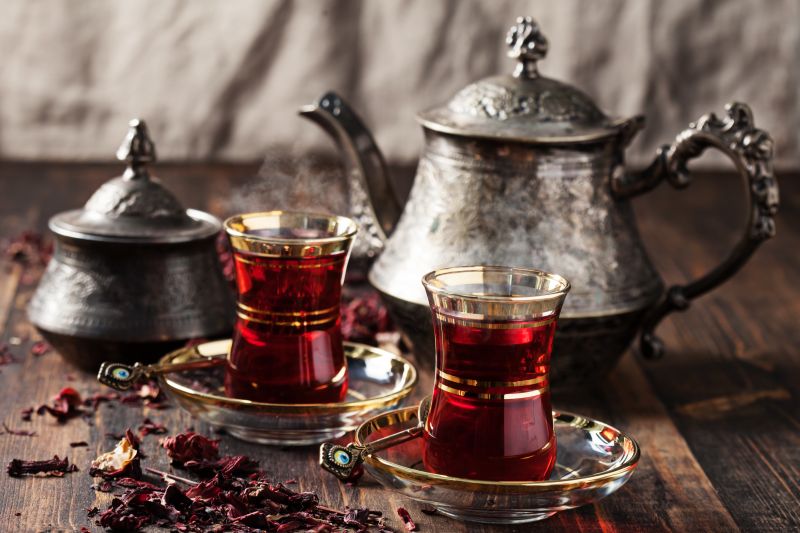
Turkish Tea
Middle Eastern Cuisine--Caroline & Mia


Video to watch: 


Mrs. Price's Middle East Link

LOOK at the gorgeous mosaic artwork in these mosques.

Dome of the Rock mosaic work, Jerusalem, Israel


Middle Eastern Textiles and Architecture--Josh & Ivey

Videos:


Website to check out:


Cappadocia, Turkey